
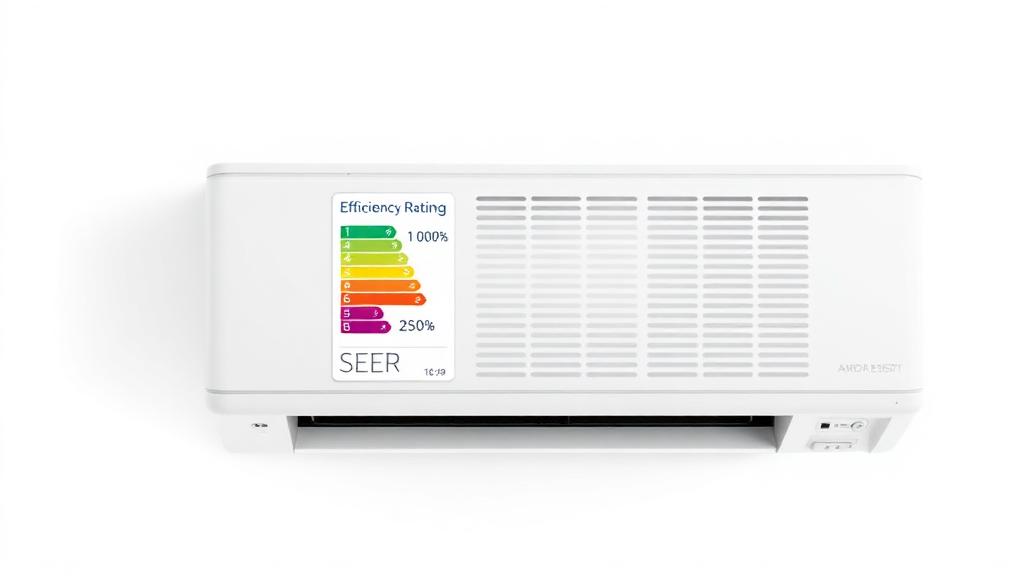
Understanding SEER Ratings: What They Mean for Your Energy Bills
A complete guide to SEER ratings and how they impact your home's cooling efficiency and costs.
What is SEER?
SEER stands for Seasonal Energy Efficiency Ratio. It measures how efficiently an air conditioner or heat pump converts electricity into cooling over a typical cooling season.
The formula is simple: SEER = Total cooling output (BTUs) ÷ Total electrical energy input (watt-hours)
Key Points:
- Higher SEER = more efficient = lower energy bills
- SEER represents average efficiency over an entire cooling season
- It accounts for varying outdoor temperatures and humidity levels
- Similar to MPG ratings for cars, but for cooling efficiency
SEER Rating Scale
8-12 SEER
OutdatedCommon in units manufactured before 2006. These systems are far below current standards and should be replaced for significant energy savings.
13-14 SEER
BasicWas the minimum standard until 2023. Still functional but considered entry-level efficiency by today's standards.
15-17 SEER
GoodA solid choice for most homeowners. Offers good balance between upfront cost and long-term energy savings.
18-21 SEER
High EfficiencyPremium efficiency range. Best for hot climates with heavy AC usage. Often includes variable-speed technology for optimal comfort.
22+ SEER
Ultra EfficientTop-of-the-line efficiency. Maximum energy savings and comfort features. Best ROI in regions with long, hot summers.
SEER vs. SEER2: What Changed?
As of January 2023, the Department of Energy introduced SEER2, a new testing standard that better reflects real-world operating conditions.
SEER (Old Standard)
- Used lower static pressure (0.1" WC)
- Tested in more ideal conditions
- Produced higher efficiency numbers
SEER2 (New Standard)
- Uses higher static pressure (0.5" WC)
- Simulates real ductwork conditions
- Ratings are ~4.5% lower than SEER
Conversion: SEER2 ≈ SEER × 0.955. So a 16 SEER unit is approximately 15.28 SEER2.
Minimum SEER Requirements by Region
The federal government sets minimum efficiency standards that vary by region:
Northern Region
(Most states north of the Mason-Dixon line)
Southern Region
(Southeast and Southwest states)
Energy Savings Comparison
Here's how different SEER ratings compare in terms of annual energy costs (based on average usage and $0.15/kWh electricity rate):
| SEER Rating | Annual Cost* | Savings vs. 10 SEER |
|---|---|---|
| 10 SEER | $540 | — |
| 14 SEER | $386 | $154/year (29%) |
| 16 SEER | $338 | $202/year (37%) |
| 18 SEER | $300 | $240/year (44%) |
| 21 SEER | $257 | $283/year (52%) |
*Based on 2,000 hours of operation and 3-ton system. Actual costs vary by location and usage.
Choosing the Right SEER for Your Home
Consider Your Climate
Hot climates (Texas, Arizona, Florida) benefit most from high-efficiency units. In mild climates, the payback period for premium efficiency is longer.
Calculate Payback Period
Divide the price difference between units by the annual energy savings to find how many years until the higher-efficiency unit pays for itself.
General Recommendations
- Mild climate, budget-conscious: 14-15 SEER
- Moderate climate, balanced approach: 16-17 SEER
- Hot climate, heavy AC use: 18-21 SEER
- Maximum efficiency, long-term stay: 22+ SEER
Frequently Asked Questions
What is a good SEER rating for an air conditioner?
A SEER rating of 15-17 is considered good for most homes. Units with 18+ SEER are high-efficiency, while the minimum standard is 14-15 SEER depending on your region.
Is a higher SEER rating worth the extra cost?
It depends on your climate and usage. In hot climates where AC runs frequently, higher SEER pays back faster. Calculate your expected savings versus the upfront cost difference.
Does SEER affect heating efficiency?
No, SEER only measures cooling efficiency. For heat pumps, look at HSPF (Heating Seasonal Performance Factor) for heating efficiency ratings.
Check Your Current System's Age
Older systems have lower SEER ratings. Find out how old your AC is and consider if an upgrade could save you money.
Use the Age CalculatorRelated Articles
When Should You Replace Your HVAC System?
Learn the key signs that indicate it's time to replace your aging air conditioner, heat pump, or furnace.
Read more10 Tips to Improve Your HVAC Efficiency
Simple steps to reduce energy bills and extend the life of your heating and cooling equipment.
Read moreThe Ultimate Guide to HVAC Air Filters
Everything you need to know about selecting and maintaining the right air filter for your system.
Read more